


ABOUT THE FEDERATION
An unbroken thread of lineage
The Essence of Tai Chi
People from all background are recognizing that Tai Chi is a delightful path toward health and relaxation. It fosters a sense of inner tranquility, joy, and physical vigor. While it may appear as a slow, rhythmic dance, these simple sequences are anchored in deep philosophical, scientific, and medical traditions. Formally established as a martial art, Tai Chi emphasizes fluid motions and a yielding nature that rejuvenates the entire body.
Understanding the Practice
The continuous, flowing cycles of Tai Chi operate on the principle that moving water remains pure. These graceful actions soothe the joints and muscles while fortifying your internal system. By combining movement with mindful meditation, Tai Chi cultivates lasting physical resilience and mental clarity.
Alleviating Modern Stress
Tai Chi utilizes intentional, structured motion to offset the pressures of a demanding modern life. Our minds are often overloaded by professional commitments, family duties, and constant digital noise. Even during sleep, the mind can remain tense. A stressed mind leads to errors and disrupts physical health. By achieving the meditative state offered by Tai Chi, your mind and body find deep, restorative rest.
Personal Benefits
Commitment to regular practice offers:
Refined posture - Enhanced strength and flexibility - Increased situational awareness - Vital energy - Improved stamina - Better circulation - Mental calmness - Sharper cognitive function - Breath control - Focused concentration - Spiritual peace - Practical self-defence - Kung-fu foundations
Authentic Yang Style Heritage
Yang Style is the world's most popular Tai Chi lineage. Modern variations like Beijing 24 are derived from this traditional foundation. Founded by Yang Lu Chan (1799-1872), known as 'The Invincible', this art has been preserved for over 160 years. His descendant Yang Cheng Fu (1883-1936) standardized the legendary 85-movement form. His 1920s photographic records serve as the definitive blueprint for authentic practice. His nephew, Grand Master Fu Zhong Wen, became the fourth generation leader, remaining a vibrant practitioner until his passing at 91. The lineage continued through Fu Sheng Yuan, the globally renowned fifth-generation authority. Today, his son, Master Fu Qing Quan (James), serves as the sixth-generation carrier of this complete family knowledge. An 8th Dan master and former national champion, Master James Fu ensures the highest standards. Under Grand Master Fu Sheng Yuan’s vision, our local instructors are committed to sharing this genuine Yang Style legacy with the Perth community.
Start Your Journey
The World Yong Nian Tai Chi Federation offers accessible introductory programs at various venues. You will train alongside others at your experience level in a supportive environment. The federation is entirely non-religious. Our expert teachers have guided thousands of individuals of all ages to successfully master and enjoy the profound gifts of Tai Chi.


Great Grandmaster Fu Zhongwen
1903 - 1994
Direct successor to Yang Chengfu's lineage and author of the definitive manual for the 85-movement form.
Grandmaster Fu Shengyuan
1931 - 2017
Founder of the World Yong Nian Tai Chi Federation. Carried the family art across the globe to unite practitioners everywhere.
Master Fu Qingquan
1971 -
Current Chairperson of the World Yong Nian Tai Chi Federation. Continues his family's art by teaching tai chi around the world.
CLASS LOCATIONS
Practice across Perth
Six venues in the Perth metropolitan area. Select a card to see session details or locate on the map.
Leederville Town Hall
84 Cambridge Street, West Leederville, WA
Sunday 9:30am to 11:30am
Scarborough/Doubleview Girl Guides Hall
228 Hancock Street, Doubleview, WA
Monday 7:15pm to 8:15pm
East Fremantle Primary School
8 Forrest Street, East Fremantle, WA
Saturday 8:30am to 9:30am
CLASS TERMS AND COSTS
Convenient terms
2026
Term One
Sunday 1 February 2026 to Saturday 11 April 2026
Term Two
Sunday 26 April 2026 to Saturday 4 July 2026
Term Three
Sunday 19 July 2026 to Saturday 26 September 2026
Term Four
Sunday 11 October 2026 to Saturday 19 December 2026
Transparent, honest pricing
No hidden fees. Each term is a fixed length with a single upfront fee, or a casual per-class rate for drop-in visitors.
Levels 1 to 4 - Adult
10 WEEKS
$140 / term
or $15 casual
Learn the 85-movements of tai chi.
Beginner students (level 1) are welcome to attend their first class as a trial at no cost.
First trial class free
Levels 1 to 4 - Concession
10 WEEKS
$120 / term
or $10 casual
Learn the 85-movements of tai chi.
Beginner students (level 1) are welcome to attend their first class as a trial at no cost.
Concession and student discounts
2027
Term One
Sunday 31 January 2027 to Saturday 10 April 2027
Term Two
Sunday 25 April 2027 to Saturday 3 July 2027
Term Three
Sunday 18 July 2027 to Saturday 25 September 2027
Term Four
Sunday 10 October 2027 to Saturday 18 December 2027
Advanced
ANNUAL
$300 / year
or $75 / term
For students who have completed the 85-movements of tai chi at the Federation.
Private Instruction
HOURLY
$150 / hour
plus travelling costs
A maximum of 10 students per private instruction class.
INSTRUCTORS
Guardians of the form
Our instructors have trained directly within the Fu family lineage and bring decades of teaching experience to every class.
Master Fu Zhongwen
4th Generation Yang Style
Leading disciple of Yang Chengfu. Founder of Yong Nian Tai Chi Association.
.jpg)
All of the current instructors at the World Yong Nian Tai Chi Federation are dedicated to passing on the instructions of the authentic Yang Style Tai Chi as passed onto them by these great masters.
-
Paul Brown
Deputy Chairperson of the World Yong Nian Tai Chi Federation.
Disciple of Fu Sheng Yuan. Has been performing the traditional Yang Style Tai Chi since 1989.
Paul teaches tai chi at the Leederville Town Hall (Sunday) and the Dianella Community Centre (Thursday).
-
Jeremy
Disciple of Fu Sheng Yuan.
Jeremy teaches tai chi at the East Fremantle Primary School (Saturday).
-
Terry
Disciple of Fu Sheng Yuan.
Terry teaches tai chi at the Leederville Town Hall (Sunday).
-
Ruth
Ruth teaches tai chi at the Leederville Town Hall (Sunday) and the Scarborough/Doubleview Girl Guides Hall (Monday).
-
Abdul
Abdul teaches tai chi at the Leederville Town Hall (Sunday) and the Blue Gum Community Centre (Saturday).
-
Jillian
Disciple of Paul Brown.
Jillian teaches tai chi at the Leederville Town Hall (Sunday).
-
Craig
Craig teaches tai chi at the Scarborough/Doubleview Girl Guides Hall (Monday).
-
Todd
Todd teaches tai chi at the Wilson Community Hall (Wednesday).
-
Denise
Denise teaches tai chi at the Wilson Community Hall (Wednesday).
-
John
John teaches tai chi at the Dianella Community Centre (Thursday).
-
Paul Be
Paul teaches tai chi at Blue Gum Community Centre (Saturday) and the Leederville Town Hall (Sunday).
-
Anna
Anna teaches tai chi at the Leederville Town Hall (Sunday).
-
Elizabeth P
Elizabeth teaches tai chi at the East Fremantle Primary School (Saturday).
-
Miki
Miki teaches tai chi at the Dianella Community Centre (Thursday) and the Leederville Town Hall (Sunday).
Master Fu Shengyuan
5th Generation Yang Style
Son of Fu Zhongwen. Founder of the World Yong Nian Tai Chi Federation. Spread Yang style tai chi globally.

Master Fu Qingquan
6th Generation Yang Style
Son of Fu Shengyuan. Current Chairperson of the World Yong Nian Tai Chi Federation. Continues his family's legacy.
ETIQUETTE
Dress and Etiquette
Dress
The World Yong Nian Tai Chi Federation does not enforce a strict dress code, but we do request that students wear loose fitting clothing, preferably a long sleeved shirt, loose pants and flat soled shoes. We also request that students not wear any attire that contains offensive material or may make other students uncomfortable
Etiquette
At the beginning and end of each tai chi class we request all students pay their respects to Great Grandmaster Fu Zhong Wen, Grandmaster Fu Sheng Yuan and the senior instructor conducting the class.

TAI CHI MOVEMENTS
Tai Chi 85 Form
Form 01 - Opening Stance
Form 02 - Opening Form
Form 03 - Grasping the Peacock’s Tail
Form 04 - Single Whip
Form 05 - Raise Hands
Form 06 - White Crane Spreads its Wings
Form 07 - Left Knee Brush
Form 08 - Hands Strumming the Lute
Form 09 - Left, Right, Left Knee Brush
Form 10 - Hands Strumming the Lute
Form 11 - Left Knee Brush
Form 12 - Step Up, Parry and Punch
Form 13 - Apparent Close Up
Form 14 - Cross Hands
Form 15 - Return the Tiger to the Mountain
Form 16 - Fist Under Elbow
Form 17 - Step Back to Repulse the Monkey
Form 18 - Oblique Flying
Form 19 - Raise Hands
Form 20 - White Crane Spreads its Wings
Form 21 - Left Knee Brush
Form 22 - Needle at the Bottom of the Sea
Form 23 - Flash Out Hands
Form 24 - Turn, Sidle and Punch
Form 25 - Step Up, Parry and Punch
Form 26 - Step Up to Grasp the Peacock’s Tail
Form 27 - Single Whip
Form 28 - Wave Hands Like Moving Clouds
Form 29 - Single Whip
Form 30 - Pat the High Horse
Form 31 - Right and Left Toe Separations
Form 32 - Right Heel Turn and Left Heel Kick
Form 33 - Brushing Left and Right Knees
Form 34 - Circle to Right and Punch Down
Form 35 - Turn, Sidle and Punch
Form 36 - Step Up, Parry and Punch
Form 37 - Right Heel Kick
Form 38 - Sidle to Left and Tame the Tiger
Form 39 - Sidle to Right and Tame the Tiger
Form 40 - Right Heel Kick
Form 41 - Boxing the Opponent’s Temple
Form 42 - Left Heel Kick
Form 43 - Right Toe Turn and Right Heel Kick
Form 44 - Step Up, Parry and Punch
Form 45 - Apparent Close Up
Form 46 - Cross Hands
Form 47 - Return the Tiger to the Mountain
Form 48 - Diagonal Single Whip
Form 49 - Parting the Wild Horse’s Mane
Form 50 - Grasping the Peacock’s Tail
Form 51 - Single Whip
Form 52 - Fair Lady Works at Shuttles – Four Angles
Form 53 - Grasping the Peacock’s Tail
Form 54 - Single Whip
Form 55 - Wave Hands Like Moving Clouds
Form 56 - Single Whip
Form 57 - Snake Creeps Down
Form 58 - Golden Cock Stands on Right and Left Legs
Form 59 - Step Back to Repulse the Monkey
Form 60 - Oblique Flying
Form 61 - Raise Hands
Form 62 - White Crane Spreads its Wings
Form 63 - Left Knee Brush
Form 64 - Needle at the Bottom of the Sea
Form 65 - Flash Out Hands
Form 66 - Turn, Sidle and White Snake Shows its Tongue
Form 67 - Step Up, Parry and Punch
Form 68 - Step Up to Grasp the Peacock’s Tail
Form 69 - Single Whip
Form 70 - Wave Hands Like Moving Clouds
Form 71 - Single Whip
Form 72 - Pat the High Horse, Palms Back to Back
Form 73 - Left Heel Turn and Right Heel Kick
Form 74 - Step Up and Punch to the Groin
Form 75 - Step Up to Grasp the Peacock’s Tail
Form 76 - Single Whip
Form 77 - Snake Creeps Down
Form 78 - Step Up to Form Seven Stars
Form 79 - Retreat to Mount the Tiger
Form 80 - Turn to Sweep the Lotus Leg
Form 81 - Bend the Bow and Shoot the Tiger
Form 82 - Step Up, Parry and Punch
Form 83 - Apparent Close Up
Form 84 - Cross Hands
Form 85 - Closing Form
Yang Chengfu
10 important points
of tai chi
1. Hold the head straight with ease
2. Sink the chest and raise the back
3. Relax the waist
4. Distinguishing solid and empty
5. Sink the shoulders and elbows
6. Use the mind and not brute force
7. Coordinate your upper and lower body
8. Unify your internal and external
9. Continuity; no stopping
10. Seek serenity in activity

28 Competition Form
Form 01 - Opening Form
Form 02 - Grasping The Peacock’s Tail
Form 03 - Single Whip
Form 04 - Raise Hands
Form 05 - White Crane Spread Its Wings
Form 06 - Left Knee Brush
Form 07 - Hands Strumming The Lute
Form 08 - Fist Under Elbow
Form 09 - Step Back To Repulse the Monkey
Form 10 - Pat The High Horse
Form 11 - Right Toe Separation And Left Heel Kick
Form 12 - Sidle To The Left And Tame The Tiger
Form 13 - Wave Hands Like Moving Clouds
Form 14 - Fair Lady Works The Shuttle
Form 15 - Parting The Wild Horse’s Mane
Form 16 - Step Up And Punch To The Groin
Form 17 - Grasping The Peacock’s Tail
Form 18 - Single Whip
Form 19 - Snake Creeps Down
Form 20 - Golden Cock Stands On Left And Right Legs
Form 21 - Step Up To Seven Stars
Form 22 - Retreat To Mount The Tiger
Form 23 - Turn To Sweep The Lotus Leg
Form 24 - Bend The Bow And Shoot The Tiger
Form 25 - Step Up Parry And Punch
Form 26 - Apparent Close Up
Form 27 - Cross Hands
Form 28 - Closing Form
A Japanese martial artist who made a special trip to China to teach Yang Style Tai Chi, Master Zhong Wenxuequan, he said that he wanted to learn Tai Chi Chuan well in two or three months.
Fu Zhongwen listened and shook his head. He felt that this Japanese martial artist lacked a certain understanding of Tai Chi Chuan, and this kind of thinking is very representative among people who learn Tai Chi Chuan at home and abroad, and thinks that learning Tai Chi Chuan has a quick practice method.
Fu Zhongwen believes that it takes a long time to practice Tai Chi Chuan and there are certain procedures, which include many contents. Fu Zhongwen has been practicing Tai Chi and teaching for more than 70 years and has accumulated rich experience. He has his own unique insights on Tai Chi, especially Yang Style Tai Chi.
Practicing Tai Chi must have the conditions.
Mr Fu Zhongwen said that learning Tai Chi Chuan is not an easy task, because Tai Chi Chuan is an advanced art. Based on his observations and his lifelong experience of practicing Tai Chi Chuan, he said that in general, the following conditions must be met to practice Tai Chi Chuan well:
-
First, it is my hobby, knowing the functions of Tai Chi;
-
Second, is to have a master, that is, a teacher who really understands Tai Chi;
-
Third, there are places to practice Tai Chi;
-
Fourth, there is time to practice Tai Chi;
-
Fifth, be able to practice hard work, willing to endure hardship;
-
Sixth, perseverance.
These conditions are for practitioners who aim to improve the skill level of Tai Chi Chuan. Generally, those who aim for fitness do not have to be so strict, but they will gain more if they try hard.
Mr Fu Zhongwen uses these conditions to observe the people who learn Tai Chi Chuan today, and thinks that not many people have these conditions.
This is mainly because the times are different, the social environment is different, and the main function of Tai Chi has weakened. Some people who practice Tai Chi Chuan lack this condition or that condition, so the talents in the Tai Chi Chuan world are not as good as their predecessors.
He said that after Yang Shaohou (3rd generation) and Yang Chengfu (3rd generation) in the Tai Chi world, there are very few people who really understand Tai Chi. If you have practiced the skills of Yang Shaohou (3rd generation) and Yang Chengfu (3rd generation), you don't have it today.
Manage several major issues
Mr Fu Zhongwen in the 20 century, 60 years of teaching based on past Yang Chengfu (3rd generation), the preparation of the "Yang style Tai Chi Chuan”, a book to explain the Yang style tai chi shelves and training method. In 1989, he edited the book "Yang Style Tai Chi Chuan Teaching Methods and Practice", which described the teaching methods and practices of Yang Style Tai Chi Chuan in detail. In addition to describing the physical use and practice process of Yang Style Tai Chi Chuan, it also put forward more than 240 key points for training, more than 230 requirements for training, pointed out more than 220 easy faults, causes and correction methods, proposed more than 240 teaching methods and more than 110 technical analysis . These two books are nearly 300,000 words and are a guide for practicing Yang style Tai Chi.
In general, Mr Fu Zhongwen believes that to practice Yang style Tai Chi Chuan well, there are several important points to be managed. If these points are well managed, it means that you have basically mastered the Yang style Tai Chi Chuan practice.
First of all, you must be conscious when practicing each movement, that is, consciousness must precede the movement. For example, "from the potential", overlooking the palm of his hands slowly put on when I must have put on the consciousness, usually referred to shoulder, must first have a sense of falling, then hands and then slowly press down. Consciousness and action must be coordinated, every move and every style are like this. After practicing this kind of consciousness guided action for a long time, the practitioner will enter a state: at night, you are quietly around, you are fully engaged in Tai Chi, your consciousness and movements are coordinated, and your whole body feels very comfortable. There is no sound, and the whole body is light and fluttering, as if you don't know for you and don't know you are tired, except for the idea of Tai Chi Chuan, there are no other distracting thoughts.
He often sees some people who practice Tai Chi Chuan without consciousness leading, and the movement is separated from consciousness. He said that this will affect the quality of training.
Second, the belt has an arc movement.
Tai Chi Chuan should focus on the waist, which is often said by people who practice Tai Chi Chuan. Mr Fu Zhongwen said that not only the waist is the main focus in Tai Chi training, but also the waist is the main focus in other Chinese martial arts, Western martial arts and other sports. For example, lifting weights doesn't work just by relying on the strength of the two arms, but on the waist. However, the waist used in Tai Chi Chuan is different from the waist used in other martial arts and sports. In Tai Chi Chuan practice, the limbs and other parts of the body are slowly rotated along an arc by the waist. Instead of going straight back and forth, every movement is carried by the waist to make the waist. Linked with the movements of the feet and hands.
He took the "cloud hand" (wave hands like moving clouds) as an example to illustrate: the completion of the "cloud hand" movement is to move the arms and hands left and right, turning left and right in an arc, driving the legs to lift, retract, and extend. Under the control of the waist, the whole body, all parts are doing arc shaped exercises, and you can't just move your limbs, don't move your waist, or separate your waist and hands.
He took "moving, blocking and pounding" (step-up, parry and punch) as an example to illustrate: to move is to turn the belt with a right fist to the left, then the belt with a right hand to turn right, with the left hand to block, and then the belt with a right fist to strike forward. Move away from the rotation of the waist. In short, under the dominance of the waist, the upper and lower parts can run through.
When the waist is moving the limbs, Mr Fu Zhongwen believes that the requirement of "storing more energy with music" must be implemented. The movements of Tai Chi Chuan are not straight forward, and the tunes are more than enough to be flexible when used. Straight, the energy will be used up, it will be stiff and vulnerable to human control.
Therefore, when practicing Tai Chi Chuan, the legs, arms, and hands should not be straight. They must have a certain curvature, but they are not soft. They are not implicit, not perfect, and have no momentum.
When practicing Tai Chi Chuan, the belt must rotate in an arc, and the speed must be uniform. A set of punches must be uniform from beginning to end, not just a certain movement or a group of movements. The movement is even, and there is no motion at all, and the up and down will follow.
Third, keep your eyes straight and see your hands, but you should not stare at your hands.
Mr Fu Zhongwen believes that Tai Chi Chuan has the traditional requirements of hands, eyes, body skills, and steps, and eye skills are very important when practicing Tai Chi Chuan. Based on his teaching experience, he put forward requirements for students' problems: when practicing Tai Chi Chuan, the eyes must see the hands, but not stare at the hands. Turn your eyes at will. When you see the hand, look straight out from the direction of the main hand, and avoid sluggishness and wildness.
He took the "Tiger Fighting Pose" (retreat to ride the tiger) as an example. When someone practiced this pose, the direction they looked at was inconsistent with the direction of the hand hitting. He thinks this is wrong, his eyes must be seen from the direction of the upper punch, and there is no reason for seeing this and that.
Mr Fu Zhongwen believes that when practicing Yang style Tai Chi Chuan, you generally have to look straight. In the past, Tai Chi Chuan was called the "four level frame", among which "one-level" means the eyes are level. Whether you turn left or right, or move forward or backward, your eyes must be level.
Fourth, distinguish between false and true (solid and empty).
Mr Fu Zhongwen believes that when practicing Tai Chi Chuan, it is necessary to distinguish between the deficiency of Yin and Yang. In each style of Tai Chi Chuan, there are virtual and real, there is yin and yang, the real is yang, the deficiency is yin, and the yin and yang are alternately changed, which should run through the practice of Tai Chi Chuan.
Fifth, the actions should be infinite and moderate.
Mr Fu Zhongwen believes that when Tai Chi is practiced, it is not right to pass or fail. He uses food as a metaphor: a person is hungry, and he should be full after eating 3 bowls of rice, but if he eats 5 bowls, he will be able to hold his stomach. Uncomfortable. If you only eat 1 bowl, it won't work, it's not enough. Practicing Tai Chi Chuan has to master the moderate degree in every move and style. How to master this degree depends on your own practice and guesswork.
Mr Fu Zhongwen often quoted a seven sentence on the Quan Jue: "Lightness and vigour, seeking understanding". He explained that lightness is not floatation, it requires composure, and the composure is not dull. If you pursue lightness, you don't need any energy at all, this is wrong; if you pursue calmness, you don't use dead energy, it's not enough.
He believes that to practice Tai Chi Chuan, one must grasp the two levels of infallibility and inefficiency. Once these two levels are well mastered, the basic requirements of Tai Chi Chuan practice will be mastered.
Mr Fu Zhongwen repeatedly explained that practicing Tai Chi Chuan is not a simple matter, and some requirements are not understood as soon as you listen, or you can practice as soon as you speak, but you must know how to do it. The wrong way to practice blindly will only make you get farther away from the realm of Tai Chi Chuan.
Under hard work training
Regarding Tai Chi Chuan practice, Mr Fu Zhongwen repeatedly said: "The method is right, and you should work hard". He added, "The method is the right method. Once you practice it, it’s fine. It’s not the case".
Mr Fu Zhongwen believes that in the past era, the hard work performed by the predecessors of Yang Family Tai Chi Chuan practice is not what contemporary people can imagine. In addition to practicing hard, Yang Luchan (1st generation), in order to allow his sons to pass on his own kung fu, when the Jianhou (2nd generation) brothers were young, they drove them to practice with a big stick every day. It's almost unbearable. Yang Banhou's (2nd generation) invincible Kung Fu was trained hard under such strict supervision.
When Yang Jianhou (2nd generation) was young, due to the daily supervision of Yang Luchan (1st generation), he practiced Tai Chi almost to the point where he could not bear his body and mind. Later he became one of the second-generation representatives of the Yang family. Yang Banhou (2nd generation) was born with a daughter and a son. His daughter couldn't meet the requirements when she practiced Tai Chi. He missed and beat her to death.
Mr Fu Zhongwen said that in the past, people who practiced martial arts relied on kung fu for food. Without good kung fu, fighting against others would be over as long as one loses for a lifetime, and even life is in danger, so they have to practice hard. Although the times are different now, to practice Tai Chi Kungfu, you have to work hard. There is no other way, and there is no shortcut.
When you start learning Tai Chi Chuan, the teacher dictates it by body. The teacher says and does it. Scholars understand it, and when they learn it, they will work hard to practice. After practicing for a while, the teacher will check and correct the action. Although the teacher dictates the body transmission, there will be deviations in the movements during the practice. This is not because the scholars deliberately deviated, but involuntarily. The teacher will show you how to change it, and if it is done, you will work hard to practice.
Practicing Tai Chi, after a period of time, there will be progress. But when there is progress, it is not clear. For example, I have practiced writing according to the rules for several years. I see it for myself and others. It is indeed better than in the past, but I can’t tell which day and year I improved. Kung fu is gradually increasing bit by bit. It's the same with Tai Chi Chuan. It's hard to learn at the beginning, either with wrong legs or shoulders, wrong wrists, and wrong eyes. After studying hard and getting home, the movements are right. It's hard to tell which day is right.
Mr Fu Zhongwen believes that if you really want to practice Tai Chi Kung Fu, you must practice it while you are young, at least four or five consecutive years of Kung Fu, every day. Spend 2 to 3 hours a day, practice Tai Chi seven or eight times at a time, without interruption in the middle, and finish it in one go. If you practice Tai Chi three times a day for 30 years, you still can't improve your kung fu, you can't keep your kung fu, you can only maintain your original skill, or even regress. Middle-aged practice Tai Chi, long-term kung fu is slower, but as long as you have perseverance and are willing to work hard, you can achieve something.
He often warned his students that they should be willing to work hard when practicing Tai Chi. Don't be afraid of hard work. Don't choose to practice Tai Chi if you are afraid of hard work.
It is impossible to practice Tai Chi Chuan without spending ten or twenty years of work, and it is very difficult to keep practicing.
Mr Fu Zhongwen said that martial arts training is a chore. As for how hard it is, he said: “Practicing Tai Chi until you sit down and don’t want to get up, you don’t want to sit down when you get up. The whole body is as uncomfortable as torture. You must practice to this level”.
NEWS
Tai Chi health benefits
A list of news articles that demonstrate the health benefits of practicing tai chi.
News Articles
Why Tai Chi Is As Good For You As CrossFit
http://time.com/4758683/tai-chi-exercise/
5 Of The Best Exercises You Can Ever Do
https://www.health.harvard.edu/staying-healthy/5-of-the-best-exercises-you-can-ever-do
Tai Chi training might promote emotional stability and slow gray matter atrophy in seniors
https://www.psypost.org/2019/09/tai-chi-training-might-promote-emotional-stability-and-slow-gray-matter-atrophy-in-seniors-54462
The effects of Tai Chi Chuan on physiological function and fear of falling in the less robust elderly: An intervention study for preventing falls - ScienceDirect
Tai Chi as an intervention to reduce falls and improve balance function in the elderly: A meta-analysis of randomized controlled trials - ScienceDirect
Tai Chi beats back depression in the elderly
https://www.psypost.org/2011/03/tai-chi-depression-elderly-4719
Eye-hand Coordination of Elderly People Who Practice Tai Chi Chuan - ScienceDirect
Coordination exercise and postural stability in elderly people: Effect of Tai Chi Chuan - ScienceDirect
Evaluating the effectiveness of Tai Chi in short-term, medium-term, and long-term on balance and strength among the elderly: A systematic review and meta-analysis - ScienceDirect
Fu Zhongwen
The hard work is worthy of the penance
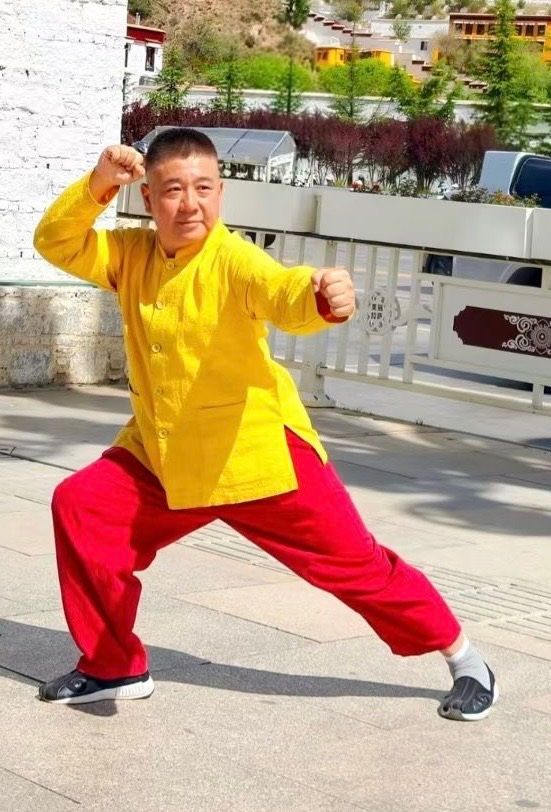
Fu Qingquan
Can tai chi really be used for combat?
Let’s Hear What Master Fu Qingquan, a Leading Representative of Traditional Yang-Style Tai Chi, Has to Say.
Can Tai Chi actually be used for combat?
I’ve been answering this question for decades, and my answer is, of course it can! But not in the way you might imagine.
From the very beginning, Yang-style Taijiquan was created to serve both health cultivation and martial application. If it can nourish and strengthen the body, it must also be capable of practical combat. Yang-style Taijiquan emphasizes that power originates in the feet, is governed by the waist, and is expressed through the hands, with the entire body connected and coordinated, section by section, as one continuous whole.
In push hands, there is a term called Ting Jin (听劲), or “listening energy.” But this doesn’t mean listening with your ears. It means using your body and hands to sense and perceive your opponent’s force. When the opponent advances, I must not resist by meeting force with force. I must neutralize it. When the opponent withdraws, I must not chase forcefully after them. Instead, I must follow their movement. Neutralize without evading; follow without chasing. To neutralize is to borrow the opponent’s force and use it against them. To follow is to move in accordance with the situation and the direction of their force. Peng, Lü, Ji, An, Cai, Lie, Zhou, Kao — Ward Off, Rollback, Press, Push, Pluck, Split, Elbow, and Shoulder—together with Jin, Tui, Gu, Pan, Ding—Advance, Retreat, Shift the Gaze Left, Look Right, and Central Equilibrium—constitute the Eight Methods and Five Steps, collectively known as the Thirteen Postures of Taijiquan. Each posture contains its own underlying logic for practical combat application.
The essence of Taijiquan lies in acting after the opponent moves, yet gaining the advantage before they can prevail. The opponent moves first; I respond afterward. This does not mean remaining motionless. It means waiting for the opponent to initiate movement before responding appropriately.
Taijiquan is not incapable of fighting. It is capable of fighting, but it must not be applied recklessly or without principle.
That is the genuine art passed down to us by our ancestors.
GALLERY
Moments of stillness


CONTACT
Begin your practice
Reach out to enroll in a term, arrange a free trial class, or ask about the lineage. We answer every question personally.
WHERE
Perth, Western Australia
yongniantaichi@hotmail.com
PHONE
0413 172 030 (Paul)
0408 906 001 (Ruth)